ABOUT
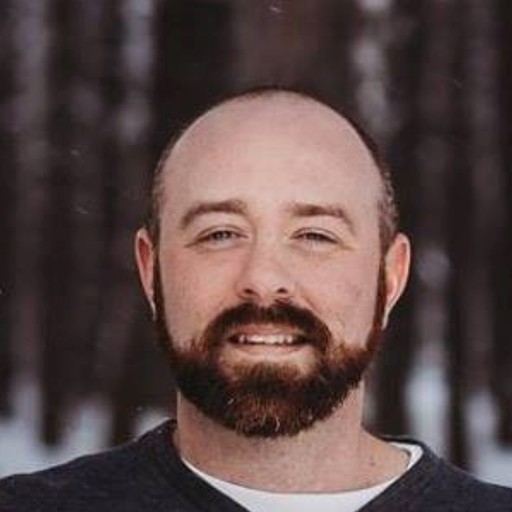
Kyle Clouthier
Business development, lead generation and AI · Clouthier Simulation Labs
I build web apps and websites end to end, and then I bring the customers.
I design, build, host and launch full-stack applications and sites on my own: the frontend, the real-time backend, the database and the hosting, then the SEO, content and outreach that bring people to them. That last part is where most developers stop. I spent twenty years in sales and running businesses first, so I can build the product and fill the pipeline.
I am self-taught, and everything I have built is public: you can open it, use it and check it yourself.
NOW
What I am working on
I lead outbound growth across the US and Canada for an Ottawa Microsoft partner that runs call centres inside Microsoft Teams. I built their website and a lead-intelligence tool that finds accounts with a dated reason to buy, and set up their CRM from scratch.
When PHP shipped an emergency fix in October 2026, I built and launched a free checker within hours, with an open-source server script and a GitHub Action. More than 1,600 checks in its first two days, written up by an Ottawa software firm and included in a security briefing for European CISOs.
A real-time strategy game on a 3D globe that people and AI models play in the same wars. It is published as an AI evaluation environment on Prime Intellect, OpenEnv and Kaggle, and I used it to test how 7 frontier models behave under pressure.
The memory layer my AI coding agents use every day, so each work session picks up where the last one stopped. It also gives the AI leaders in SECOND STRIKE a memory of every player.
More on the work page, including FavourBee, Practice Pieces and my open-source tools.
WHAT I DO
What you can hand me
Websites and web apps
Designed, built, hosted and launched, from a small business site to a real-time app.
PHP upgrades and security fixes
Getting older WordPress and PHP sites onto supported versions without breaking them.
Lead generation
Finding the buyers who are changing systems right now, with the reason and the person to call.
AI features and agents
Chat assistants, AI tools inside a product, and agents with memory that are tested before they ship.
HOW I WORK
What working with me is like
TRACK RECORD
How I got here
I spent twenty years finding business and closing it, and building companies from the ground up: a digital agency, construction and property businesses. When AI began reshaping that work, I went all in on building with it. The sales years are why my software gets used: I know how to put it in front of the people who need it.
2026 to now
Head of Business Development, BulbNorAm
Outbound sales and lead generation for a Microsoft Teams contact centre partner, US and Canada.
2025 to now
Founder, Clouthier Simulation Labs
My own software: SECOND STRIKE, Neruva, the PHP2Shell check, client sites and AI tools.
2024 to 2025
Sales Manager, Caledon Hills Resort
Led the sales team for four resort properties and rebuilt their follow-up and CRM.
2023 to 2024
Project Manager, BELFOR Property Restoration
More than 50 restorations, up to $750,000 rebuilds, including families displaced by wildfires.
2021 to 2022
Head of Business Development, SkyRise Scaffold Systems
Took a new company from concept to revenue in six months and won a municipal contract.
2012 to 2025
Owner, DigitalMax
A remote digital marketing agency: paid search, SEO, affiliate and email, and the software behind them, run alongside my other roles.
2006 to 2018
Construction, real estate and my own businesses
Estimator and project manager, licensed realtor, and founder of a property maintenance company I grew to twelve staff and sold.
I also write up what I find. My paper on how AI models behave when they are cornered, The Midnight Index, is on Zenodo.
Have a project in mind?
A web app, a new site or a rebuild, a PHP upgrade, lead generation, or an AI feature. Contracts and roles, remote from Ontario, Canada.